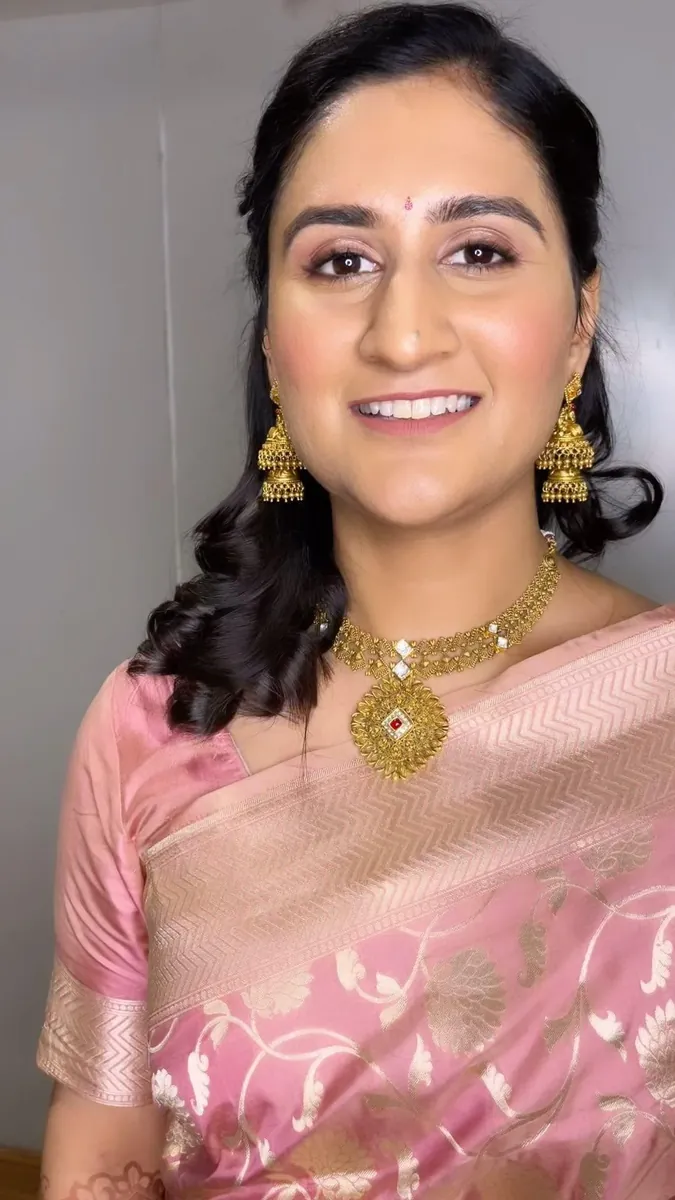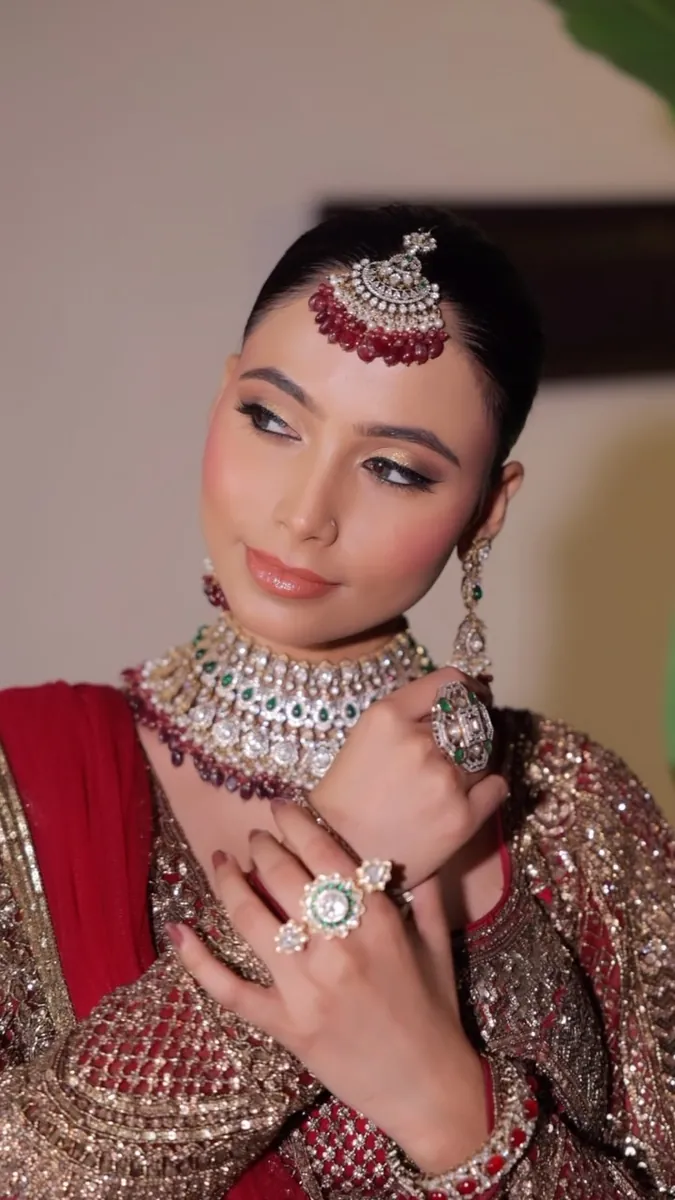
Key takeaways
- A bridal makeup trial is a rehearsal of your wedding day face, done on your real skin with your outfit colours and jewellery in mind.
- Schedule it roughly four to eight weeks before the wedding, after major skin treatments are done.
- Arrive with a clean, moisturised face and bring outfit swatches, jewellery, reference photos and a list of what you love and dislike.
- Judge the look in daylight, indoor light and flash, and wear it for a few hours before deciding.
- Write down every product choice and change so the wedding day look matches what you approved.
A bridal makeup trial is the one appointment where you get to see your wedding day face before the wedding day. It is part rehearsal, part conversation and part test drive. Done well, it takes the guesswork out of the biggest beauty decision of your shaadi and lets you walk into your pheras knowing exactly how you will look.
This guide covers what a bridal makeup trial is, when to book it, what to bring, what happens during the session and how to judge the result honestly. Whether you are a classic red bride, a pink lehenga bride or someone who wants a soft, minimal face, the same steps apply.
What is a bridal makeup trial?
A bridal makeup trial is a practice session with your makeup artist before the wedding, where she creates a version of your bridal look on your own skin. It lets you test the base, eyes, lips and overall intensity against your outfit colours, jewellery and lighting, so the final look is agreed, not guessed, before the big day.
Think of it as a fitting for your face. Your lehenga goes through trials and alterations, and your makeup deserves the same care. The trial shows how your skin takes a particular base, how long the finish holds and whether a look that seemed perfect on Instagram actually suits your features.
It is also the moment you and your artist learn to speak the same language. "Natural" can mean a no-makeup face to one bride and soft glam to another. Seeing it on your face removes that confusion.
When should you schedule your bridal makeup trial?
Most brides do best with a trial around four to eight weeks before the wedding. By then your outfits, jewellery and hairstyle direction are usually settled and major skin treatments are complete. It is early enough to make changes, yet close enough that your skin and hair colour will look much the same on the day.
A few points help you pick the right date:
- After skin treatments, not before. If you are doing facials, peels or other clinic treatments, finish the stronger ones before the trial so your skin is calm and representative. Our bridal skin prep timeline shows how to space them out.
- After your outfit is final. The colour and embroidery of your lehenga drive the eye and lip choices, so try to have at least a swatch.
- On a free day. Keep the rest of the day light so you can wear the makeup for a few hours and see how it holds.
- With room to repeat. If you want to adjust something major, a gap of a few weeks lets you try again without a rush.
Destination brides or brides with many functions may want to plan earlier, so travel and multiple looks can be discussed in one go.
What to bring to your makeup trial
Bring anything that affects how your final look should appear: outfit colours, jewellery, reference photos and notes on what you like and dislike. The more real context your artist has, the closer the trial will be to your wedding day. A small checklist means nothing important is left behind or forgotten.
| Bring this | Why it matters |
|---|---|
| Lehenga swatch, dupatta or a photo in natural light | Eye, cheek and lip colours are chosen to work with your outfit, not against it. |
| Key jewellery (maang tikka, nath, necklace, earrings) | Heavy polki or kundan changes how bold the face can be and where attention should sit. |
| A top close to your blouse colour and neckline | Your face, neck and chest need to match on camera, and the neckline shows how much to blend. |
| Three to five reference photos | Pictures of looks you love, and one or two you do not, explain your taste faster than words. |
| Your daily skincare | Useful if your skin needs a familiar moisturiser or if you react to certain products. |
| A list of allergies or sensitivities | Helps the artist avoid ingredients that irritate your skin or eyes. |
| Phone with a charged battery | For daylight, indoor and flash photos, which tell you far more than a mirror. |
| A trusted opinion (one person) | One honest friend, sister or mother helps; a crowd of opinions usually confuses. |
If you wear contact lenses or glasses, mention it. If you plan to wear lenses on the day, wear them to the trial too, because they affect how the eyes are lined and how comfortable you feel.
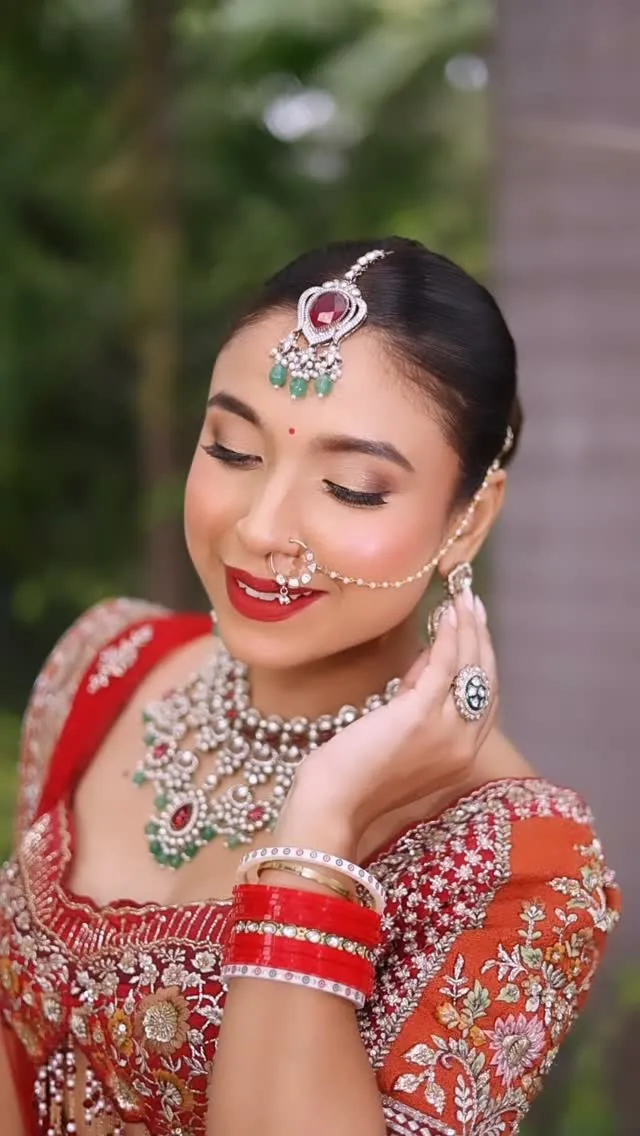
How to prepare for your bridal makeup trial
Prepare as if it were a mini wedding day: arrive with clean, hydrated skin, groomed brows and no new products or treatments in the days before. A calm, representative face shows the artist exactly what she will work with on the day, so the trial gives you a true preview.
- Moisturise well for a few days before so dry patches do not distract from the result.
- Shape your brows a few days ahead, not on the morning, to avoid redness.
- Avoid new facials or peels right before the trial. Fresh treatments can leave your skin sensitive or flaky.
- Sleep and drink water. It sounds simple, but tired, puffy skin will not show you the real result.
- Arrive bare-faced, or remove everything gently before the artist starts.
- Tie your hair back unless you are also trying a hairstyle, so your hairline and jaw are easy to work on.
If you are unsure which base style you want, read about HD vs airbrush bridal makeup beforehand, so you can ask to see the finish that interests you.
What happens during a bridal makeup trial, step by step
A typical trial starts with a short consultation, moves into skin prep and base, then builds eyes, cheeks and lips before photos and adjustments. The artist explains choices as she goes, so you understand why a shade or technique works and can request changes before the session ends.
- Consultation. You share your outfit, jewellery, references and the feeling you want, whether that is minimal magic, soft glam or full glam.
- Skin assessment and prep. The artist checks texture, dryness, oiliness and any pigmentation, then hydrates and primes accordingly.
- Base. Foundation, concealer and powder are matched to your face, neck and body so you do not look a different shade in photos.
- Eyes. Shadow, liner, kajal and lashes (or a no-lash look) are built to suit your eye shape and your jewellery.
- Cheeks and definition. Blush, contour and highlight add the flushed, softly defined effect that reads well on camera.
- Lips. Often two shades are tried, for example a classic red and a softer rose, to see which suits the outfit best.
- Photos and review. You check the look in different lights, take pictures and discuss tweaks.
- Notes. The final shades and changes are written down for the wedding day.
Questions to ask during your trial
Use the trial to ask how the look will last, how it will photograph and how it can change across functions. Clear answers on longevity, touch-ups and timing on the day matter as much as the look itself, because they decide how relaxed your morning feels.
- How will this base hold through a long day, heat or tears?
- What will you change if the wedding is during the day versus at night?
- How much time do you need on the morning of the wedding?
- Can this look be softened or intensified for other functions?
- What should I carry for touch-ups, and when should I use it?
- Is there anything about my skin I should work on before the wedding?
For a fuller list to use before you even book, see our guide on questions to ask a makeup artist before booking.
Bookings open for 2026 – 27
Planning your look? Let's talk.
Share your date, functions and venue – Priyanka will reply with availability and a personalised quote.
How to judge your trial look honestly
Judge the trial in real conditions, not only in the artist's mirror. Look at it in daylight, indoor light and with flash, wear it for a few hours and compare photos with your reference images. If you still recognise yourself and feel confident, the look is close to right.
| Test | What to check |
|---|---|
| Daylight by a window | Does the foundation match your neck? Is the skin texture visible and natural? |
| Indoor warm light | Do the colours still look rich, or do they fade into your outfit? |
| Phone flash | Any white cast, patchy powder or overly shiny areas? |
| Wear for a few hours | Does the base crease, separate or get oily on the T-zone? |
| Side profile | Is the blending smooth along the jaw and hairline? |
| With your dupatta draped | Does the lip and eye intensity balance the embroidery and jewellery? |
Be honest with yourself. A look can be beautifully done and still not be you. Many brides want bridal glam that feels like them, only a little more polished, and the trial is where you protect that.
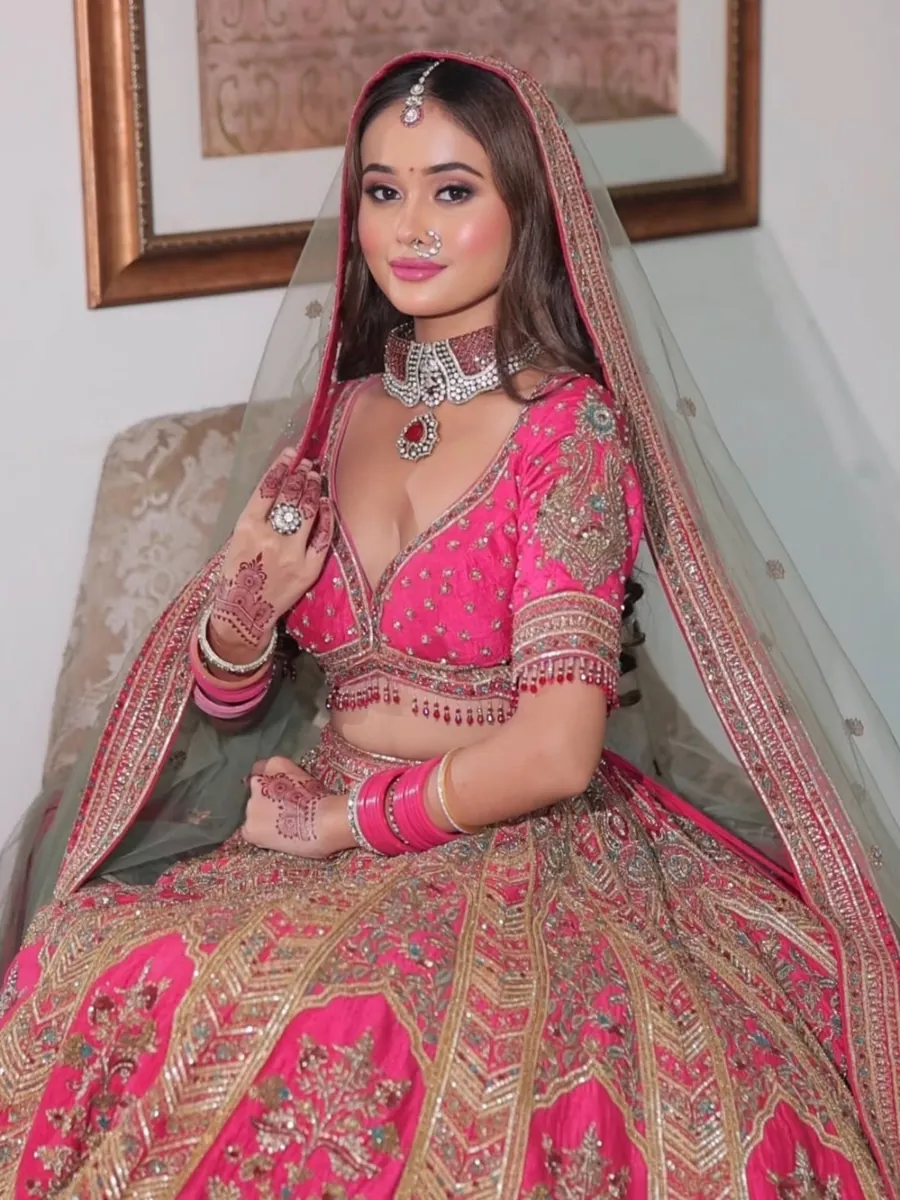
Trialling looks for mehendi, haldi, cocktail and reception
You do not always need a separate trial for every function, but it helps to discuss each look while your wedding day face is being tested. Your artist can show how the same base can be lightened for mehendi and haldi or dialled up for cocktail and reception, which saves time later.
- Mehendi and haldi: fresh, dewy skin, waterproof eyes and a light lip that can survive colour and celebration.
- Engagement or roka: polished and photo-ready, often softer than the wedding look.
- Cocktail: the most room to play, with shimmer, a stronger eye or a glossy lip.
- Reception: elegant and long-lasting, often matte or satin to handle hours of photos.
If one of these is a big priority, such as a sequin cocktail outfit or a sage green engagement lehenga, mention it so time can be spent on it during the session.
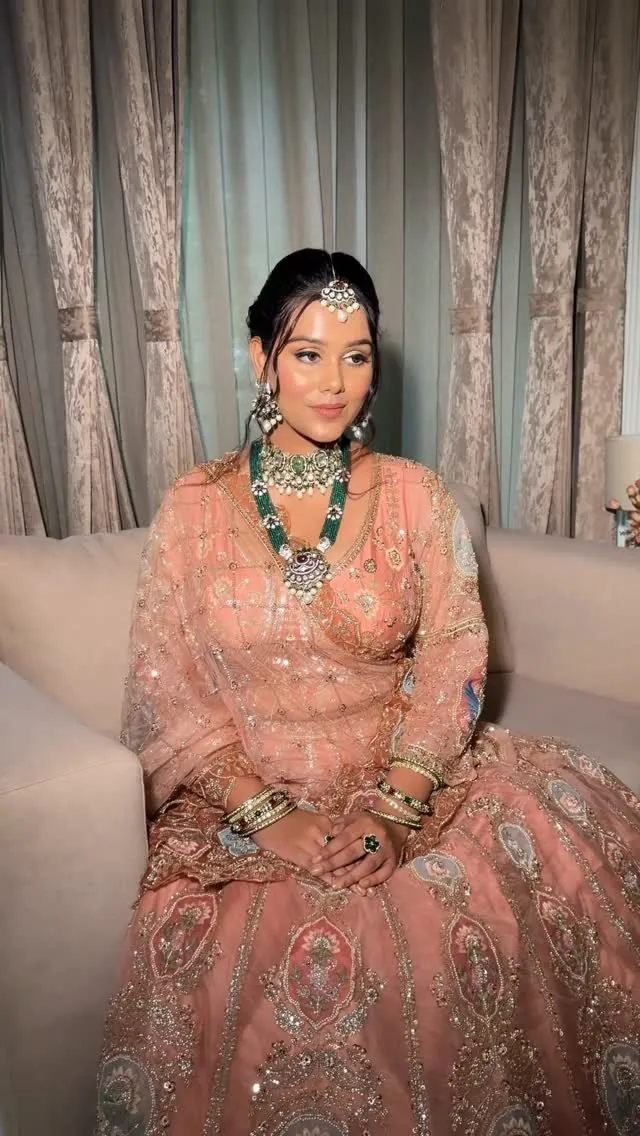
Common bridal makeup trial mistakes to avoid
The biggest trial mistakes are arriving without outfit details, bringing too many opinions, judging only in the mirror and staying quiet about what you dislike. Each one makes the result less accurate. Go prepared, speak up kindly and take notes so the trial does its job.
- Too many references. Ten different looks make it hard to find a direction. Pick a few that share a mood.
- Copying a look made for different features. A dramatic cut crease on someone with hooded eyes may not translate to yours. Ask your artist to adapt it.
- Bringing a group. Everyone has an opinion, and the bride's own voice can get lost.
- Not wearing it long enough. Removing the makeup after an hour tells you nothing about how it holds.
- Staying silent. Artists would much rather adjust at the trial than discover you were unhappy on the day.
- Changing everything afterwards. A new skincare routine or a sudden hair colour change after the trial can alter the final result.
Bridal makeup trials with Makeup Artistry by Priyanka
Makeup Artistry by Priyanka is a Delhi-based freelance bridal makeup artist who travels to your home, hotel or venue across Delhi NCR and beyond. Whether a trial fits your booking, and how it is arranged, depends on your date, functions and location, so share your details on WhatsApp for a quote.
Priyanka's signature is "minimal magic": a clean, softly defined face with flushed skin and subtle traditional details, along with soft glam, a flawless HD base and full glam on request. As she puts it:
Elegant. Timeless. Uniquely you.
If you want hair done together, it is handled by the partner hair artists she regularly works with and can be booked on request. You can see the range of red, pink and pastel brides in the portfolio, or read more about her bridal makeup in Delhi. Bookings are open for 2026–27 weddings with limited dates.
After the trial: lock in your wedding day look
Once you are happy with the trial, confirm the final details in writing: base finish, eye style, lashes or no lashes, lip shade, timing on the day and any function-wise variations. Save the best photos in one folder and share them with your artist so the wedding day look matches what you approved.
- Note the exact lip shade and any adjustments you asked for.
- Confirm the getting-ready location, start time and how many people need makeup.
- Keep your skincare steady until the wedding and avoid new treatments in the final weeks.
- Share any outfit or jewellery changes with your artist as soon as they happen.
A trial is not a test you pass or fail. It is a conversation that ends with a plan, and a calmer bride on the morning of the wedding.
Bookings open for 2026 – 27
Planning your look? Let's talk.
Share your date, functions and venue – Priyanka will reply with availability and a personalised quote.