Key takeaways
- Bridal makeup for dusky skin starts with an exact match of undertone and depth across your face, neck, chest and mehendi hands. Never go lighter.
- Correct dark circles and pigmentation with a thin layer of peach or orange, not pink, lilac or a pale concealer.
- Set with a tinted or warm powder in a light layer, dust off any excess and test with flash at your trial.
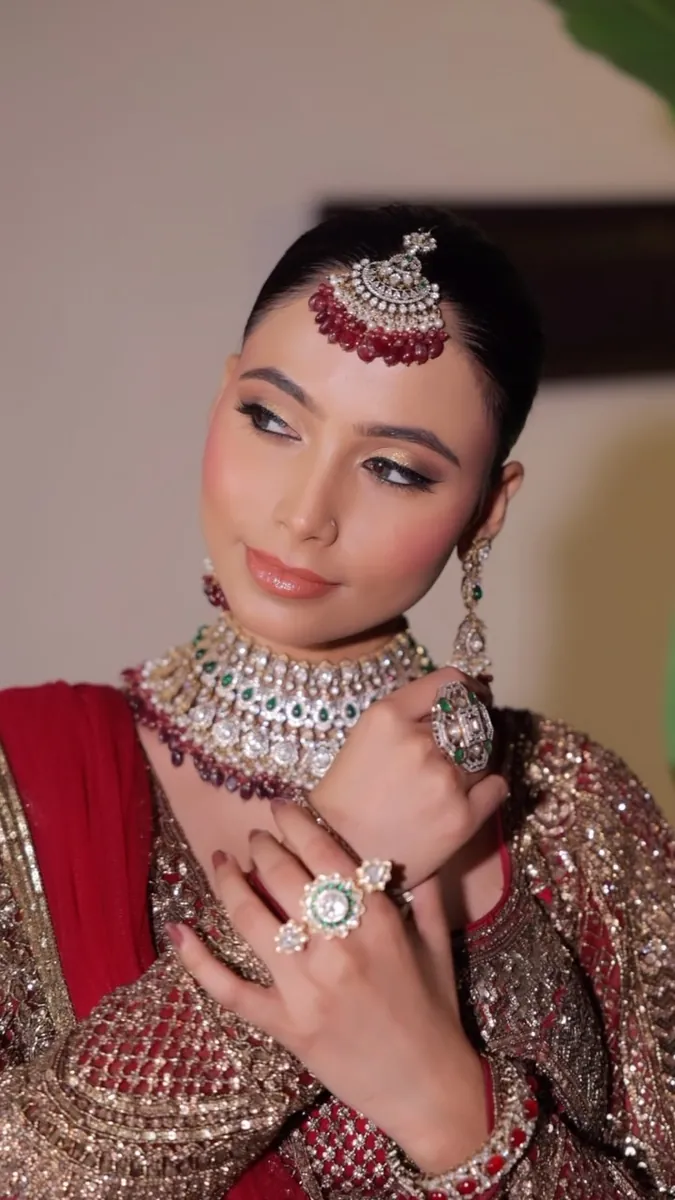
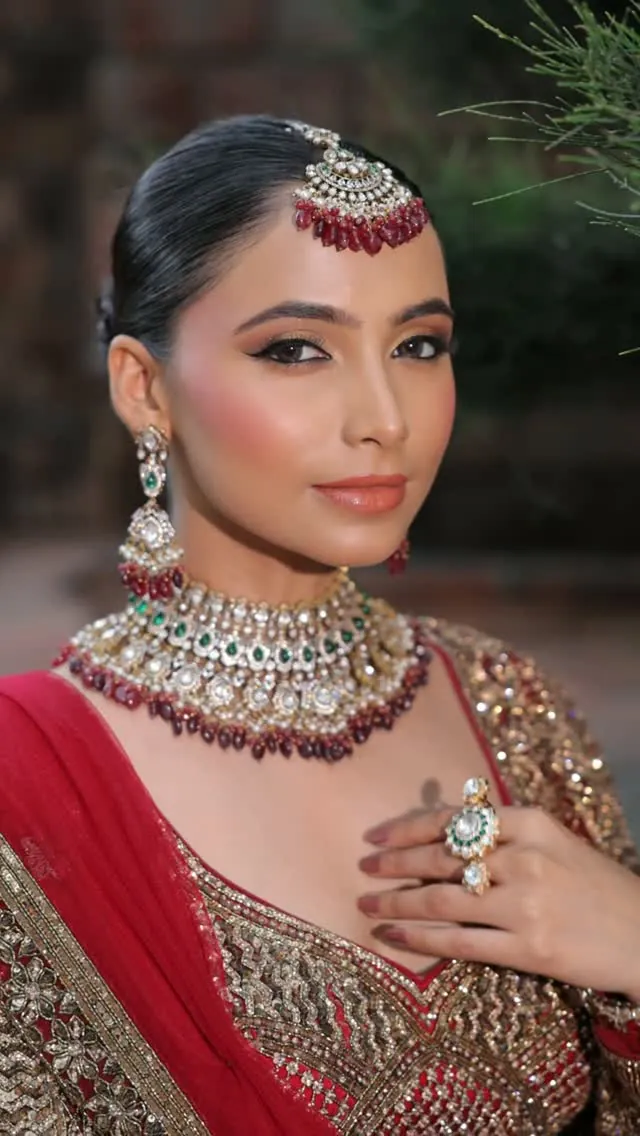
- Choose warm, rich shades: bronze, copper and gold eyes; terracotta or berry blush; brick, red, berry or caramel lips.
- Tell your makeup artist clearly: "Match my skin, don't lighten it." A good artist will already be working that way.
In this series · Skin, prep & long-wear
If you have dusky, deep or wheatish skin, you have probably seen it happen to a friend or cousin. The bride looked beautiful in the mirror, then the photos came back with a grey face, a white forehead under flash and a neck two shades deeper than her cheeks. Good bridal makeup for dusky skin prevents all of that, and it starts with one rule: enhance your skin tone, never lighten it.
This guide explains why the grey cast happens, how to find your undertone, how to match and correct your base, and which blush, eye and lip shades work for each undertone. It is written from the makeup chair, not a product shelf, so there are no brand names here, only product types and techniques you can discuss with any artist.
Why dusky brides end up looking grey or white
Dusky brides usually look grey or white because of four fixable mistakes: a foundation that is too light, a setting powder that is white or applied too heavily, flashback from reflective ingredients under camera flash, and the wrong colour corrector on pigmentation. None of these is about your skin. Each is a product or technique choice.
- Too-light foundation. A shade even slightly lighter than your skin sits on top of it as a pale film. In daylight, that film reads as ashy or grey.
- White or heavy powder. Translucent powders often look white in the compact, and a thick bake under the eyes leaves pale patches on deeper skin.
- Flashback. Highly reflective ingredients bounce flash back to the camera, so the face photographs whiter than the neck. More on this below.
- Wrong corrector. Pink, lilac or green correctors on brown or bluish pigmentation can create a grey, muddy patch instead of cancelling it.
A fifth cause is quieter: pressure to look "brighter". If anyone around you suggests a lighter base for the wedding, this guide gives you the reasons to say no.
Find your undertone in two minutes
Your undertone is the colour beneath your skin's surface, and it stays the same whether you are tanned or not. Most dusky and wheatish Indian skin falls into warm golden, neutral or olive. Do three quick tests in natural daylight with a bare face, and go with the answer that comes up most often.
The jewellery, white-cloth and vein tests
- Jewellery test. Hold gold and then silver jewellery against your bare neck. If gold makes your skin look alive and silver makes it look dull, you are likely warm. If both look good, you are likely neutral.
- White-cloth test. Hold a stark white cloth and then an off-white or cream cloth near your face. If stark white makes you look slightly grey or tired while cream looks soft, lean warm or olive. If both work, lean neutral.
- Vein test. Look at the veins on your inner wrist. Greenish veins suggest warm, bluish or purple veins suggest cool, and a mix suggests neutral. On deeper skin, veins can be hard to read, so trust the first two tests more.
Warm golden, neutral and olive explained
| Undertone | What you notice | Foundation that works | Foundation that fails |
|---|---|---|---|
| Warm golden | Gold jewellery glows, skin tans quickly to a golden or caramel brown | Golden, yellow or caramel-based shades | Pink-based shades, which look grey or ashy |
| Neutral | Both gold and silver suit you, neither pink nor yellow dominates | Balanced beige-brown shades with no strong pink or yellow | Very yellow shades (look sallow) or very pink ones (look chalky) |
| Olive | A subtle green or grey-green cast; many shades look too orange or too pink on you | Neutral-to-golden shades with a slight olive or green lean | Orange-heavy shades, which turn brassy by evening |
Olive is an easy undertone to miss in Indian skin. If every foundation you have ever bought looked either orange or pink on you, there is a good chance you are olive.
Wheatish vs dusky vs deep: what changes
These words describe depth, not undertone, so a wheatish bride and a deep bride can share the same warm golden undertone. What changes with depth is the strength of the correction, the colour of the setting powder and how much pigment your blush and lip need to show up. The deeper the skin, the richer the shade needs to be.
Shade-matching your base to jaw, neck, chest and mehendi hands
Match your foundation to where your face meets your neck, then check it against your chest and hands in daylight. Your face should blend into your neck with no visible line, never sit lighter. "One shade lighter for photos" backfires because cameras exaggerate the mismatch, and flash can make a light base look almost white.
Here is how a careful match works on a dusky bride:
- Swatch three shades on the jawline, not the hand or wrist. The right one disappears.
- Check in daylight. Step to a window. Indoor yellow light hides grey, and white tube lights exaggerate it.
- Look at your neck and chest. In a deep-neck blouse, your chest is in every photo. Many brides have a slightly deeper neck or chest from sun exposure, so the face is matched to them, not the other way round.
- Remember your mehendi. Mehendi stains your hands and arms a deep orange-brown. A face that is much lighter than your hands looks disconnected in close-up ring and chooda shots.
- Mix if needed. Many skins sit between two shades. Mixing two foundations, or adding a drop of a golden or olive adjuster, is normal practice.
Your skin also changes with the season. A bride with a December wedding who did her trial in May may need a different shade on the day. Prepping your skin steadily in the months before helps too; our bridal skin prep timeline covers that.
Colour correcting pigmentation and dark circles without a grey cast
On dusky skin, dark circles and pigmentation usually look brown, blue-brown or purple-brown. Peach cancels these on wheatish to medium skin, while orange or red-orange cancels them on deeper skin. Apply a thin layer only where you need it, under foundation, and finish with concealer matched to your skin, not lighter.
- Under-eye circles: a sheer peach or orange corrector pressed in with a fingertip or small brush, then a concealer at most a touch brighter than your foundation and in the same undertone.
- Pigmentation around the mouth and chin: common on Indian skin. The same peach or orange corrector works, tapped on in small amounts.
- Patches of hyperpigmentation or acne marks: spot correct, then spot conceal. Covering the whole face with heavy concealer is what flattens dusky skin.
Avoid pink, lilac and green correctors on deeper skin unless your artist has a specific reason, and avoid concealers two or three shades lighter under the eyes. That "bright under-eye" trend creates a pale inverted triangle that looks grey in daylight. For pigmentation you want treated, rather than covered, see a dermatologist well before the wedding.
Setting powder and flash: how to avoid flashback in wedding photos
To avoid flashback, use a light layer of a tinted or warm-toned powder matched to your depth, press it only where you need it, and dust off any excess. Highly reflective powders, especially those very high in silica, bounce flash back to the camera. A flash photo at your trial is the simplest test.
Beauty science writer Michelle Wong of Lab Muffin explains that flashback comes mostly from silica, which scatters light, and that the effect grows with how much of it sits on the skin. She also notes that mineral sunscreen filters such as titanium dioxide and zinc oxide can contribute in some cases, but not always. In practice, this means three things for a dusky bride:
- Thin, not thick. Use a light layer of powder and press it in. Skip a heavy bake, or keep it brief and brush off every trace.
- Tinted or warm, not white. Choose a powder close to your skin's depth. Pale yellow "banana" powders suit lighter warm skin. Deeper skin needs a deeper golden or tinted powder.
- Test it. At your trial, ask for a photo with phone flash on, then one in daylight. If your face looks whiter than your neck, the setting step needs adjusting.
The HD or airbrush question matters less than these choices. Both can look beautiful on deeper skin when the shade is right and the layers are thin. Read our HD vs airbrush bridal makeup guide for how they compare, and our bridal makeup trial guide for what to check at your trial.
Blush, bronzer and highlight that actually show on deeper skin
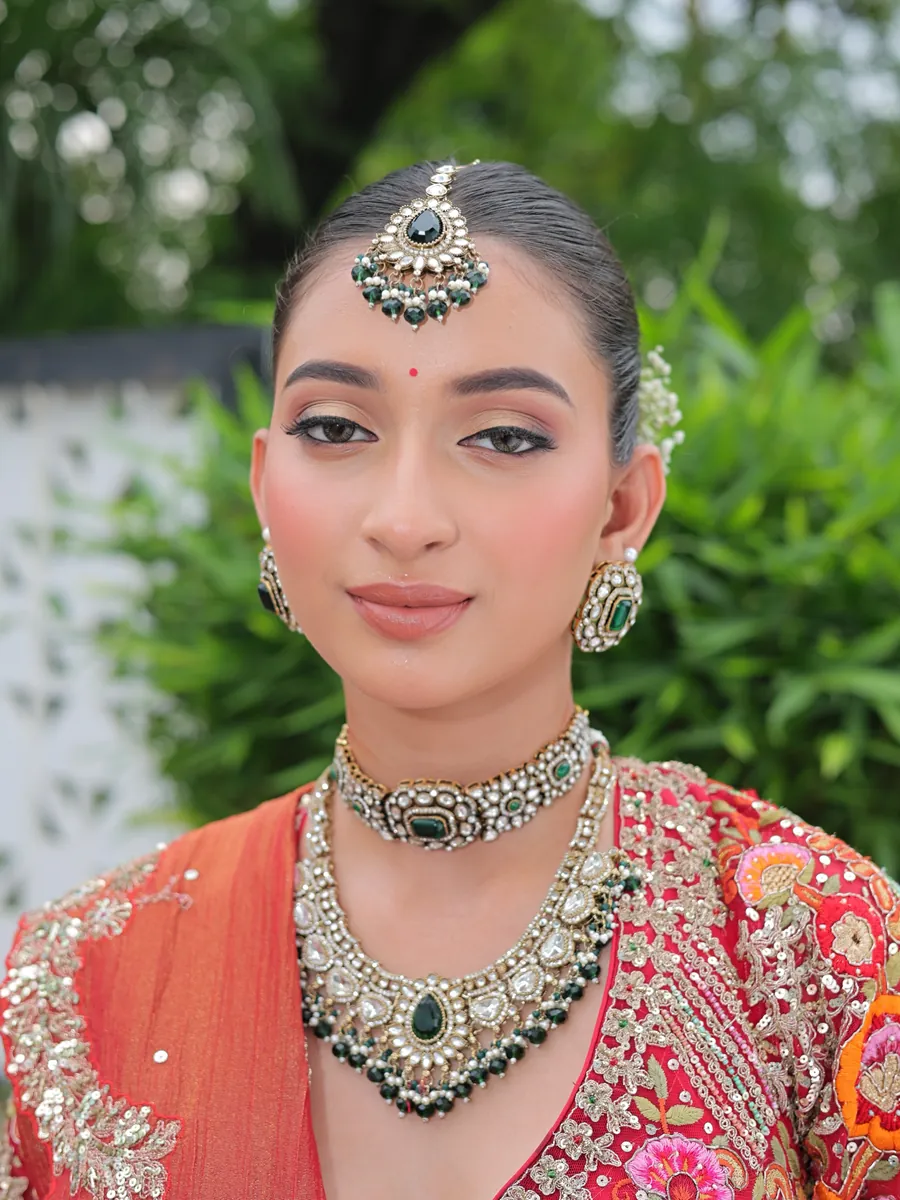
Blush on dusky skin needs enough pigment and warmth to show through: terracotta, apricot, deep peach, raspberry, brick rose or warm plum, depending on your undertone. Bronzer should be one to two shades deeper than your skin and not grey-toned. Highlight works best in gold, bronze or champagne-gold, never icy silver or pearl-white.
| Undertone | Blush | Bronzer and contour | Highlight |
|---|---|---|---|
| Warm golden | Terracotta, apricot, burnt orange, warm peach | Golden or reddish brown | Gold, bronze |
| Neutral | Deep peach, raspberry, rose-berry | Neutral chocolate brown | Champagne-gold, soft gold |
| Olive | Brick rose, warm plum, deep coral | Soft brown with no orange or grey | Antique gold, rose-gold |
Pale baby pinks and lilac blushes often sit on top of deeper skin and look chalky. Cream or liquid blush under powder, followed by a light veil of powder blush on top, tends to give the most natural, flushed result. This is close to what Priyanka calls her "minimal magic": a clean, softly defined face with flushed skin that still looks like you.
Eye makeup for dusky brides: bronze, copper, gold, plum and kajal placement
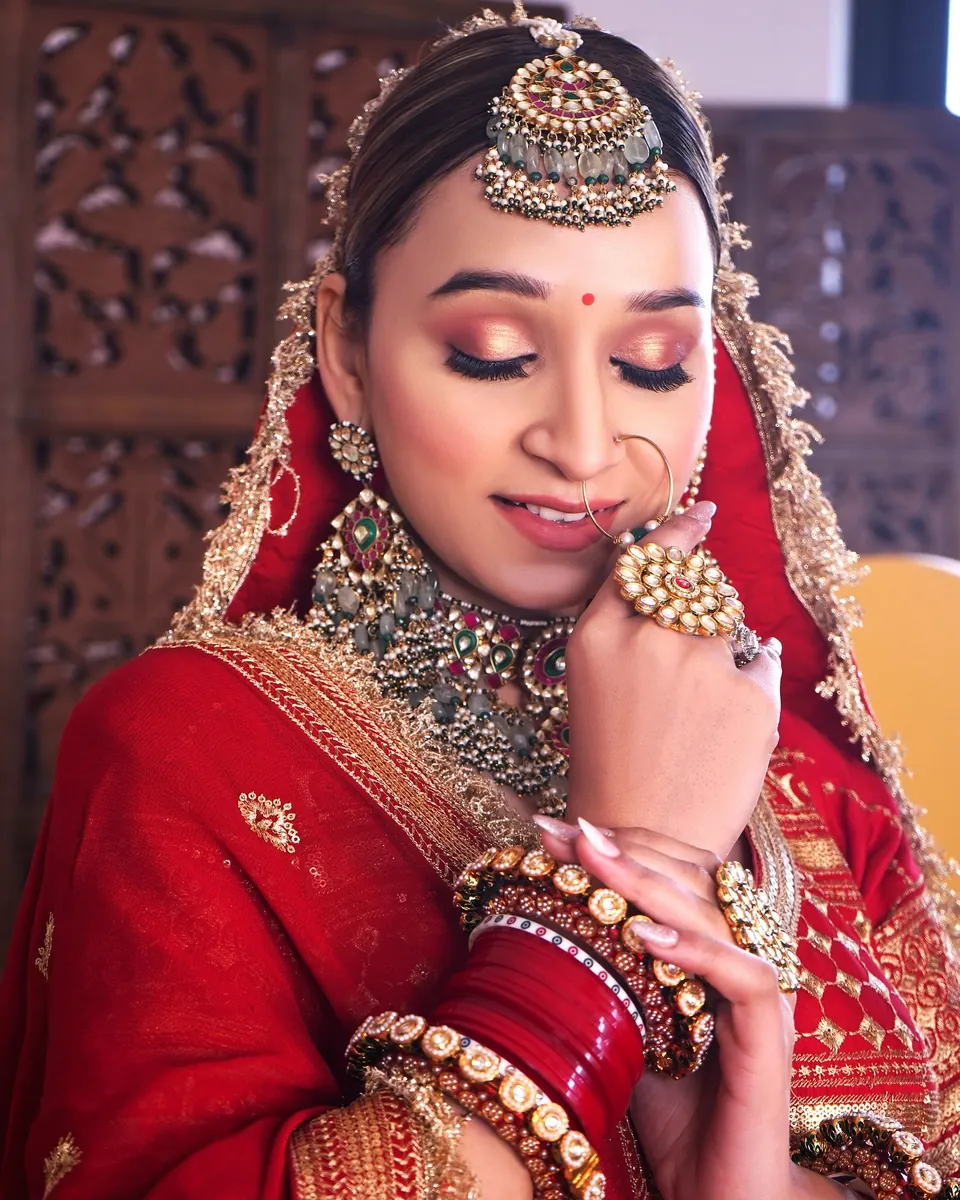
Bronze, copper, antique gold, plum, deep chocolate and emerald all glow on dusky skin because they share its warmth and depth. Build the crease with a warm brown, put the metallic in the centre of the lid, and tightline the upper waterline with kajal or a deep brown so the eyes look defined without looking smaller.
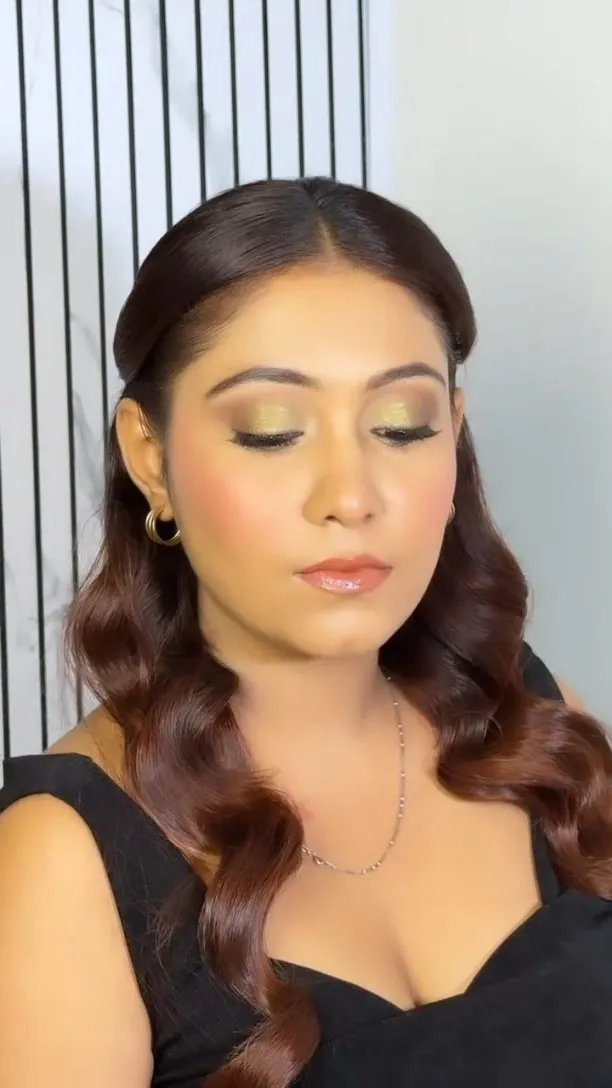
A simple step-by-step for the classic dusky bridal eye:
- Prime the lid and set it with a skin-matched shadow, not a white or very pale base.
- Blend a warm medium brown into the crease, then a deeper brown or plum in the outer corner.
- Press a bronze, copper or gold metallic onto the centre of the lid with a damp brush or fingertip.
- Tightline the upper waterline and smudge a brown or black line along the lower lashes.
- Brighten the inner corner with champagne or gold, not white.
- Finish with lashes if you want them, or skip them for a "no lashes" minimal look.
On the lower waterline, a full ring of kajal can close the eye on photographs. A smudged line along the lower lashes keeps the eye open. If your lids have natural darkness, a little peach corrector there keeps shadow colours true.
Lip shades by undertone: nudes that aren't grey, reds, berries and plums
The best lip shades for a dusky bride depend on undertone. Warm golden skin suits brick, tomato red, terracotta and caramel. Neutral skin suits true red, rosewood and berry. Olive skin suits brick, wine, plum and cinnamon. Nudes must have a brown base and sit slightly deeper than your natural lips, never pale.
| Undertone | Nude that works | Red | Berry, plum and deep | Avoid |
|---|---|---|---|---|
| Warm golden | Terracotta, caramel, warm toffee | Tomato red, brick red, orange-red | Copper-brown, deep coral | Pale beige, chalky pink |
| Neutral | Rosewood, mauve-brown | True classic red | Berry, raspberry, deep rose | Concealer-pale nudes |
| Olive | Cinnamon, warm cocoa | Brick, deep blue-red | Wine, plum, oxblood | Grey-lilac nudes, very orange corals |
Two tips make any lip shade look better on deeper lips. Line with a pencil one shade deeper than the lipstick, and if your lips have natural darker edges or uneven pigment, a thin layer of peach or orange corrector before lipstick keeps the colour true. A satin or soft matte finish lasts through the pheras and the meal better than a gloss.
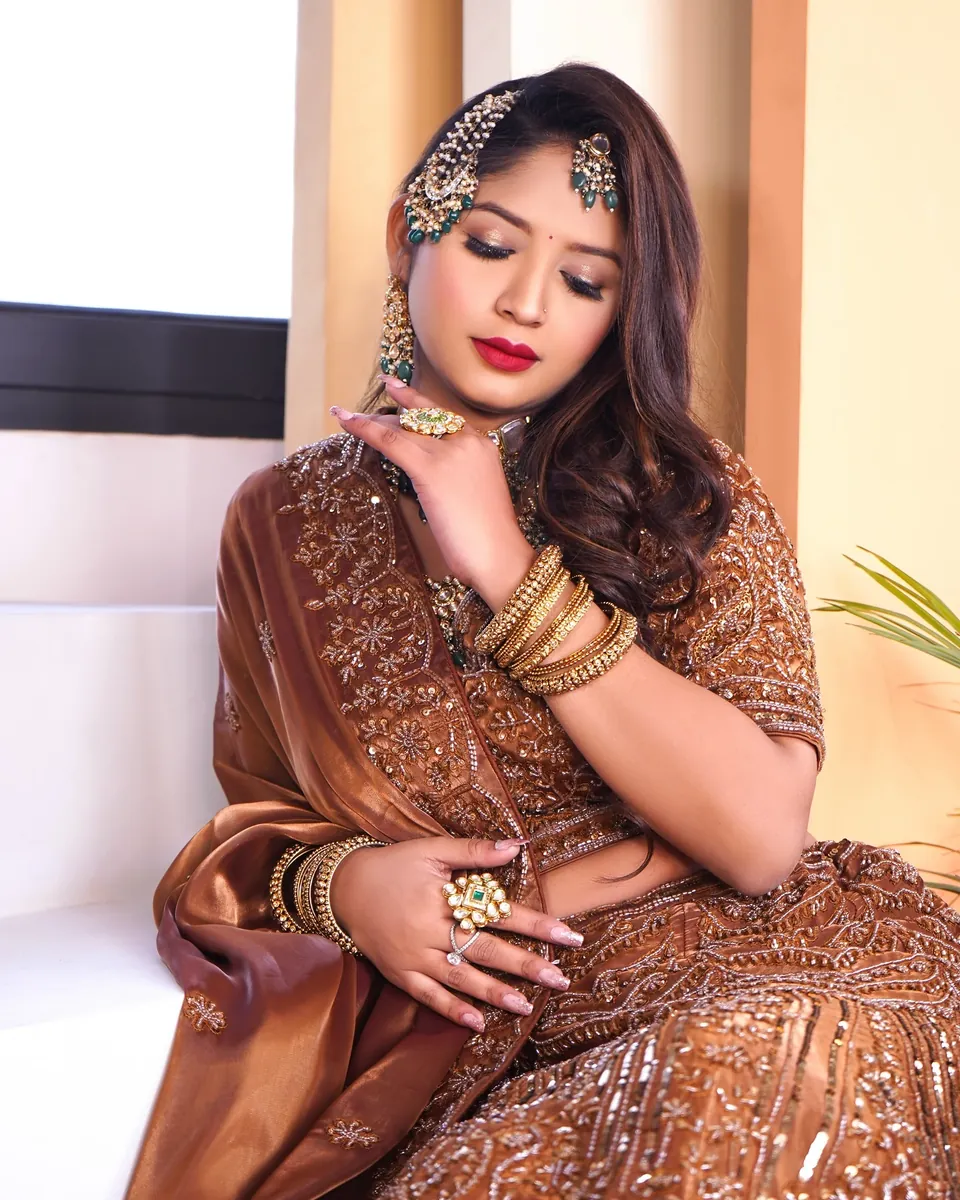
Bookings open for 2026 – 27
Planning your look? Let's talk.
Share your date, functions and venue – Priyanka will reply with availability and a personalised quote.
Dusky brides and lehenga colour: red, pastel, ivory and gold
Every bridal colour can suit a dusky bride when the shade and the makeup are chosen together. Red, maroon, rust, copper, emerald and gold are naturally flattering. Pastels and ivory work well too, as long as they have warmth in them and the makeup is a little richer, so the outfit does not wash your face out.
- Red: warm golden skin glows in tomato and orange-red; neutral and olive skin often suits deeper maroon, wine or true red.
- Pastels: choose peach, blush, champagne or mint with gold work rather than cold, greyish lilac or icy blue near the face. Add a bronzed glow and a deeper lip.
- Ivory and gold: beautiful with a warm, bronzed base, gold highlight and a terracotta or brick lip.
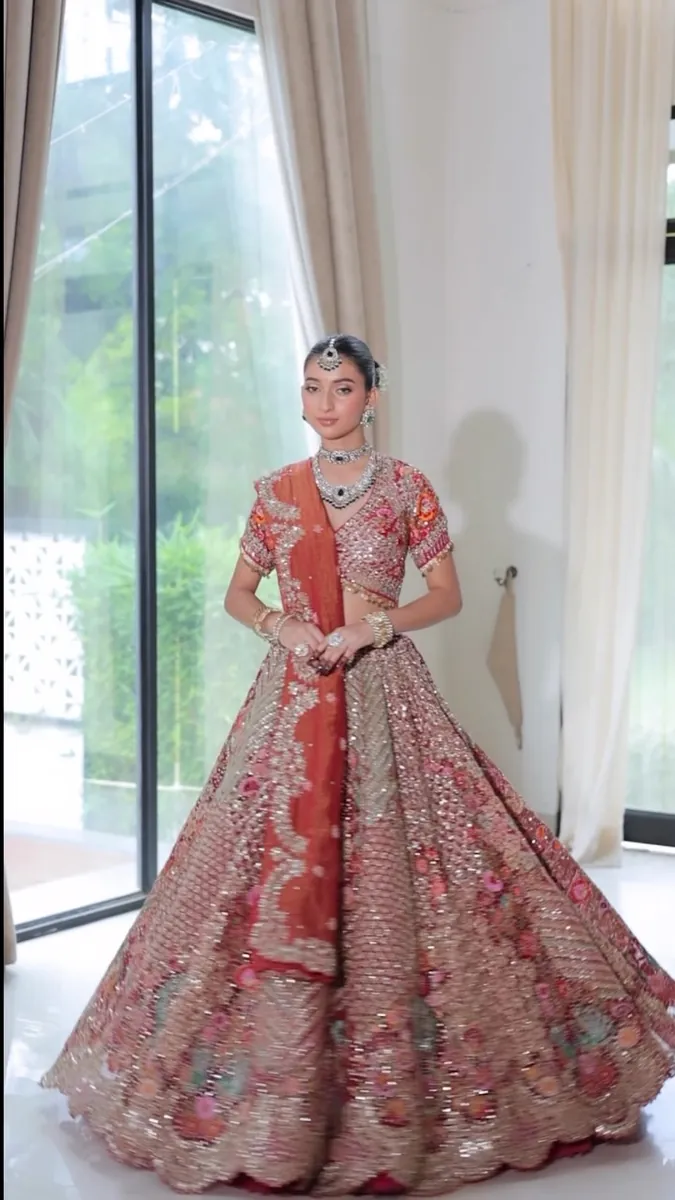
For a full colour-by-colour chart, see our guide to bridal makeup by lehenga colour.
If you are wheatish: the three adjustments that matter
Wheatish brides sit between medium and dusky, so small shifts make a big difference. The three adjustments that matter most are checking for an olive undertone, using peach rather than orange correction, and matching your base to your skin at the time of the wedding, including any tan, rather than an older swatch.
- Check for olive. Many wheatish brides are sold yellow foundations that turn sallow, or pink ones that turn ashy. If both have happened to you, look at neutral shades with a slight olive lean.
- Use peach, not orange. Orange correctors can show through on wheatish skin. A soft peach is usually enough for under-eye circles.
- Match on the right date. Delhi summers tan quickly and winters dry skin out. Your trial shade may need a small change by the wedding. Dry winter skin also makes powder cling, so hydrate well and keep powder light.
What to tell your makeup artist, plus the never-do list
Tell your makeup artist clearly that you want your own skin tone enhanced, not lightened, and that the base should match your neck, chest and hands in daylight. Ask for a flash photo at the trial, warm correction on any pigmentation and shades chosen for your undertone. A good bridal artist will welcome that brief.
You can use this script at your trial or on WhatsApp before booking:
- "Please match my face to my neck and chest. I don't want to look lighter than I am."
- "I think my undertone is warm, neutral or olive. Can you confirm it with me?"
- "Please correct my under-eyes with peach or orange, not a pale concealer."
- "Can we take one photo with flash and one in daylight before we finalise?"
- "I like warm, rich shades. Please avoid pale nudes and white highlight."
The never-do list for dusky bridal makeup:
- Never choose a foundation lighter than your skin "for photos".
- Never use a stark white setting powder or a heavy bake that is left on.
- Never use pink or lilac correctors on brown pigmentation.
- Never highlight with icy silver or pearl-white.
- Never pair a pale beige nude with a deep, dramatic eye on deeper skin. It reads as grey lips.
- Never skip the daylight and flash check at your trial.
Priyanka is a Delhi-based bridal makeup artist whose signature is "minimal magic", bridal glam that feels like you, just levelled up. She travels to your home, hotel or venue across Delhi NCR, and her bridal makeup starts from ₹20,000, with packages customised to your functions, people and location. See how that is worked out on the bridal makeup price page, or share your date and plans on WhatsApp for a quote.
Bookings open for 2026 – 27
Planning your look? Let's talk.
Share your date, functions and venue – Priyanka will reply with availability and a personalised quote.